Vehicle Component Processing Robotic Automotive Grinding And Polishing Machine For Metal Parts
Integrated Surface Processing for Automotive Metal Components
The Vehicle Component Processing Robotic Automotive Grinding and Polishing Machine for Metal Parts is designed for automotive manufacturers and Tier 1/Tier 2 suppliers that need automated surface treatment for production components.
The system combines robotic grinding and polishing technologies to process selected surfaces after casting, forging, welding, or machining. Different processing stations can be configured according to the component material, original surface condition, and downstream manufacturing requirements.
It provides a versatile finishing solution for automotive factories handling repetitive metal component production.
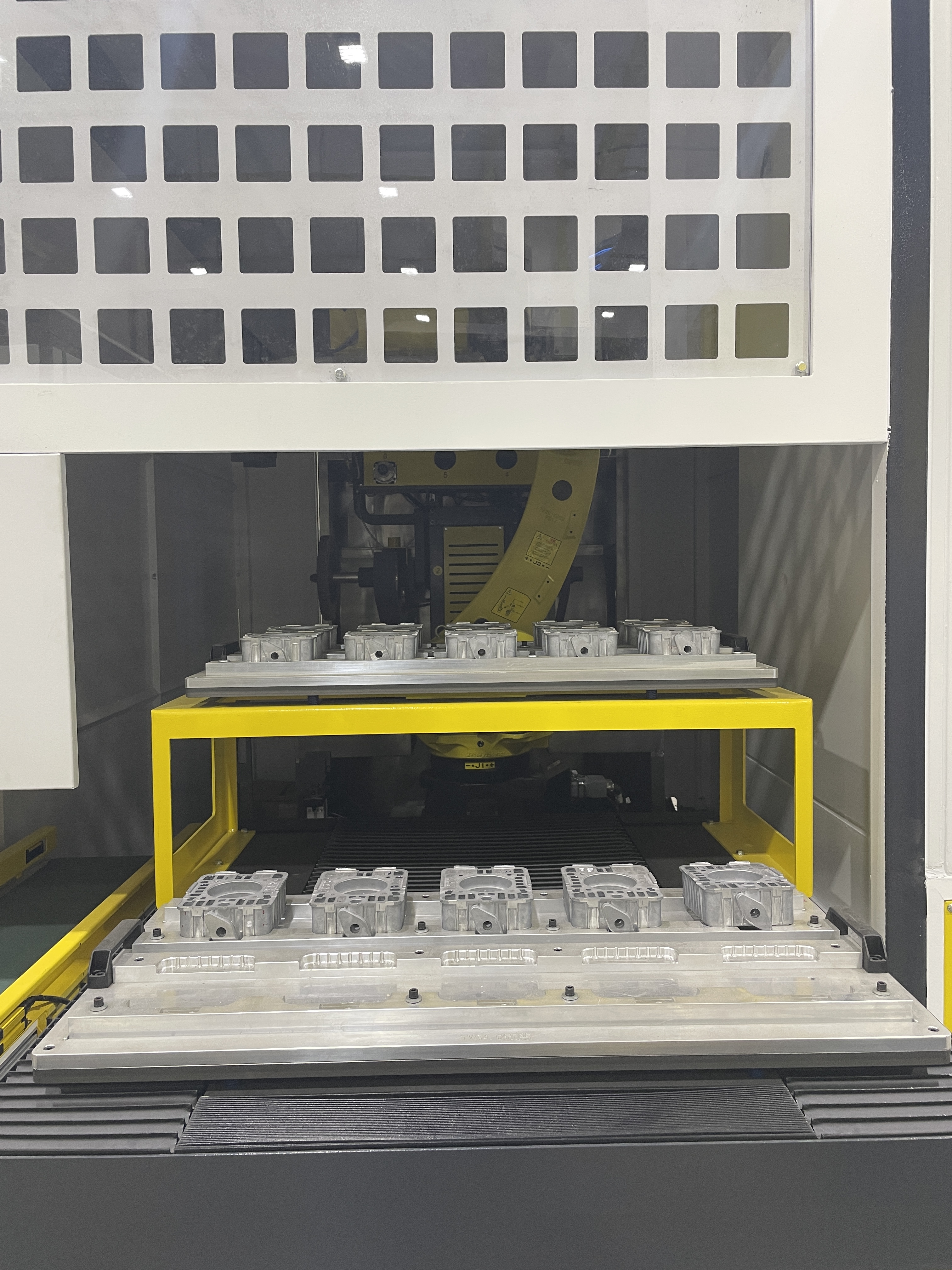
One System for Different Vehicle Components
Automotive manufacturing involves many metal parts with different finishing requirements. The robotic system can be applied to suitable:
- Chassis components
- Engine parts
- Transmission components
- Suspension parts
- Aluminum structural parts
- Automotive brackets
- Metal housings
- Exhaust components
- EV metal components
- Motorcycle parts
Applications can be developed for steel, stainless steel, aluminum, cast iron, and other suitable automotive metals.
Combine Grinding and Polishing Processes
Different stages of vehicle component production may leave different surface conditions. The robotic cell can be configured for operations such as:
Rough Grinding - removes unwanted material from selected areas.
Deburring - treats burrs remaining after machining or cutting.
Surface Blending - smooths transitions between adjacent areas.
Fine Finishing - prepares selected surfaces for downstream treatment.
Polishing - improves the appearance of visible automotive components.
The required operations can be combined according to the actual part instead of using the same process for every component.
Fit Between Manufacturing and Assembly
Robotic finishing can be introduced at different points in the automotive production process. For example:
Casting / Forging → Machining → Robotic Grinding & Polishing → Cleaning → Inspection → Coating → Assembly
For welded components:
Forming → Welding → Robotic Finishing → Surface Treatment → Inspection
This allows manufacturers to place automated finishing exactly where secondary surface processing is required.

Developed Around Automotive Production Requirements
A suitable robotic finishing solution should consider more than the workpiece shape. During project evaluation, key factors include:
- Component material
- Part dimensions and weight
- Initial surface condition
- Required material removal
- Areas requiring processing
- Required final finish
- Production cycle
- Parts per shift
- Upstream and downstream equipment
- Quality inspection requirements
Based on this information, the robot, tooling, fixture, positioner, and processing sequence can be configured for the actual production environment.
Frequently Asked Questions
What automotive metal parts can the machine process?
The system can be evaluated for suitable chassis, drivetrain, engine, suspension, structural, decorative, and other automotive metal components.
Can grinding and polishing be performed in the same robotic cell?
Yes. Multiple tools or processing stations can be integrated when the component requires both material removal and finer finishing.
Is it suitable for aluminum automotive parts?
Yes. Suitable processes can be developed for aluminum components using appropriate abrasives, polishing media, and operating parameters.
What information is needed for a proposal?
Please provide part drawings or 3D models, material, dimensions, weight, current manufacturing process, areas requiring grinding or polishing, required finish, and target production capacity.


